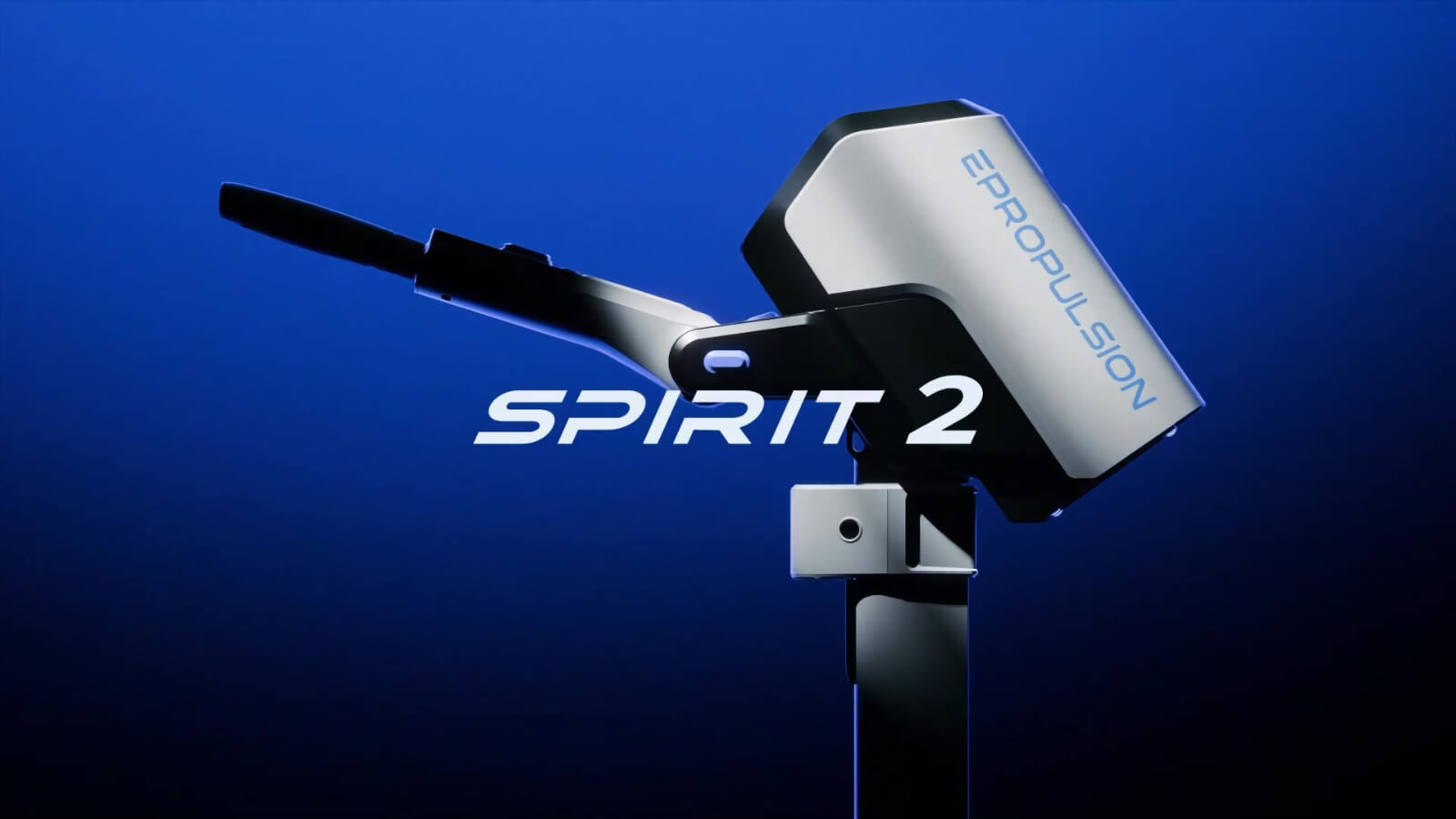
ePropulsion has just launched the 4th generation of its immensely popular Spirit electric outboard. While we don’t have all the details yet (our official dealer technical training won’t happen for a couple weeks still), but the information available so far paints a clear picture: this is a major upgrade over the Spirit 1.0 with only a modest price increase.
In short, expect roughly twice the usable power for about a quarter more cost.
While the Spirit 1.0 will remain in the lineup for now, the Spirit 2 edges close to the Navy 3.0’s territory. Its combination of higher output, improved battery tech, and built-in hydrogeneration suggests the Navy 3.0’s long-term future may be limited.
Below is an early look at what’s new. Full specifications will follow once we add the model to the OceansEV catalogue and begin taking orders.
Power Output: 2kW Nominal, 3kW Boost
The nominal power output has been increased to 2kW from the current 1kW on the Spirit 1.0. However, it also adds a “boost mode” that steps up power output to 3kW when needed. The eLite also includes a “boost mode” from the nominal 500W to 750W for up to a minute at a time; we expect the Spirit 2 to operate similarly.
Because any horsepower equivalent is a marketing approximation based on thrust/performance rather than a strict mechanical conversion, we expect the Spirit 2 to be rated as about 4.5hp-equivalent at its full 2kW output, and 6hp equivalent in boost mode. However, the propeller has also been redesigned, so it’s possible it may be marketed as a 5hp equivalent, and 7hp in boost mode. We’ll know more soon. For now, what we know is that the Spirit 2 is twice as powerful at all RPMs as the Spirit 1.0 models, and three times as powerful for short bursts.
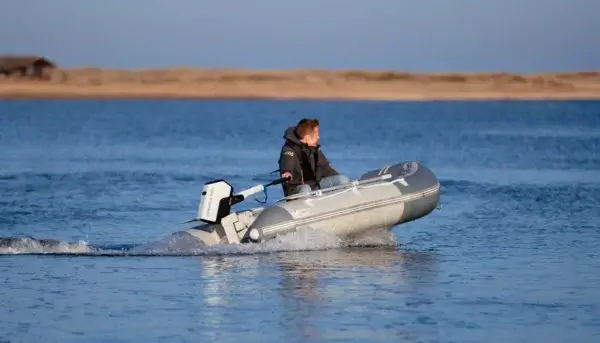
Another way to think of it is that the Spirit 2 should be capable of getting a small dinghy up on a plane (something that wasn’t possible with the Spirit 1.0). If your typical cruising speed with a Spirit 1.0 was at 50% throttle (which would have given you up to 2.5 hours of runtime), you’ll only need 25% of the throttle for the same cruising speed.
Range: More Energy Density, Same System Weight
The integrated, removable battery of the Spirit 1.0 has also been redesigned (now called the Spirit Battery Ultra), and is not only more compact, it also has 40% more energy storage 1,539Wh (vs. the Spirit Battery Plus‘ 1,276Wh). This new battery will provide a runtime at full throttle of just under an hour, or just under 2 hours at half throttle (which would be the same as full throttle on the Spirit 1.0). What’s most remarkable is that the Spirit Battery Ultra is roughly the same weight as the old battery, and the entire system is also the same weight (about 20kg/44lbs).
The Spirit Battery Ultra acts as a power bank, and can charge devices at up to 45W. We expect that it includes one or more USB-C ports, like the eLite does.
The new Spirit Battery Ultra is still compatible with 3rd-party batteries—it’s great news that ePropulsion continues provide this flexibility which very few other manufacturers do.
Hydrogeneration Now Standard
Hydrogeneration is built into the Spirit 2. Under sail and moving at least 3 knots, the motor can recharge the battery—no more choosing between Evo (with regeneration) and Plus (without it). This simplifies the product line and offers more flexibility for sailors.
New Full-Colour LCD Display
The display on the Spirit 2 looks gorgeous—more like a modern smartphone display than the low resolution, monochrome display of the Spirit 1.0. It’s not clear yet whether the new firmware will take advantage of the new display and provide a richer set of information than the Spirit 1.0, nor if the display is a touchscreen or not.
Easier Transport
Tiller folds at a 90-degree angle and locks to allow for easy carrying (likely with the battery detached) with perfect weight balance, just like like eLite.
Adjustable-length Tiller
The final new feature we noted is a nice improvement, and another feature inspired by the eLite—an extendable tiller handle
Where the Spirit 2 Fits in the Lineup
Early indications suggest the Spirit 2 could replace the Spirit 1.0 Evo and potentially overlap with the Navy 3.0 for many use cases. Boaters looking for maximum portability with significantly more punch now have a compelling mid-range option.
What This Means for Buyers
Based on early information, the Spirit 2 looks positioned to replace both the Spirit 1.0 Evo and the Navy 3.0 for many boaters.
- Substantial speed improvements
- Better range-per-weight
- Modernised controls and user experience
- Regeneration included by default
- Continued battery flexibility
It looks poised to become one of the most capable portable electric outboards on the market and a likely best-seller in Canada for dinghies, tenders, small sailboats, and cottage boats.
A full breakdown will follow once official dealer materials arrive.