
FAQs
Battery
What is the range of the ePropulsion Spirit 2 at cruising speed vs. full throttle?
Range on the ePropulsion Spirit 2 varies based on speed, boat type, and conditions. The figures below are approximate for a typical tender or inflatable in calm conditions:
- Full throttle (Sport Mode): approximately 8–12 km
- Cruising speed (~50% throttle): approximately 20–35 km
Because water drag increases exponentially with speed, running at half throttle more than doubles your range. For the best balance of speed and range, a cruising speed around 50–60% throttle is recommended.
If you need more range, the Spirit 2 can be connected to an E-series external battery (E60, E100, or E163) for significantly extended operation. Sailboat users can also take advantage of hydrogeneration to partially recharge the battery while sailing at 4 knots or more.
How long does it take to charge the ePropulsion Spirit 2 battery?
Charging time for the Spirit 2’s Spirit Battery Ultra depends on which charger you use:
- Standard charger: approximately 5 hours from empty to full
- 12V DC charger: suitable for charging from a boat’s 12V system or vehicle; slower than the standard charger
- Solar: varies by panel output and available sunlight; see the Spirit 2 Solar Charge Controller
The Spirit Battery Ultra does not need to be attached to the motor to charge — it can be removed and charged indoors with a standard 110V/120V outlet. The standard charger is included with the Spirit 2; 12V charger and solar charge controller are available separately.
How long does the ePropulsion Spirit 2 battery last on a single charge?
The ePropulsion Spirit 2 battery (Spirit Battery Ultra), is a 1,382 Wh NMC lithium battery. Runtime depends heavily on throttle level, boat weight, wind, and current conditions.
At full throttle, expect approximately 1 hour of runtime. At a comfortable cruising speed (around 50% throttle), runtime typically extends to 2.5–3 hours. If you are sailing and using the Spirit 2’s hydrogeneration feature, the battery can be partially recharged while underway, further extending your effective range.
For greater range, the Spirit 2 can also be connected to an E-series external battery (E60, E100, or E163) via the E-series battery adapter.
Can the Spirit 2 battery be charged with solar panels?
Yes, the Spirit 2 battery (Spirit Battery Ultra) can be charged using solar panels, making it ideal for extended sailing or cruising. You will need the Spirit 2 Solar Charge Controller, which manages the charging process safely.
Compatible solar panels must meet the following specifications:
- Output: 100W to 180W
- Operating voltage: 12V to 35V
- Maximum current: 10A
- Connectors: MC4
Many third-party solar panels that meet these specs are compatible. Solar charging can be done while the motor is in use or while it is off. You can also charge the Spirit 2 battery simultaneously with a solar panel connected and the battery installed on the motor, making it a set-and-forget solution for boats with permanent solar installations.
How do I check the battery charge level on the Spirit 2?
To check the charge level of the Spirit 2’s Spirit Battery Ultra, press the button on the battery to display the current charge level via the built-in LED indicator array. Each LED segment represents a portion of the total capacity.
When the motor is running, battery level is also displayed on the tiller display in real time, helping you plan your return to dock before the charge gets too low. As a best practice, aim to recharge when the battery reaches 20% rather than running it to empty, as regularly depleting below 20% shortens battery lifespan.
How should I store the Spirit 2 battery over winter?
Proper winter storage of the Spirit Battery Ultra will protect its lifespan and ensure it is ready to go in spring. Follow these steps:
- Charge to 60–80% before putting the battery into storage. Do not store it fully charged or fully depleted.
- Store in a cool, dry location with an ambient temperature between 15°C (59°F) and 25°C (77°F). Avoid freezing temperatures, which can permanently damage lithium cells.
- Check the charge every three months. If the battery has dropped well below 60%, top it up. The battery will enter a deep sleep mode at low charge, which causes self-discharge to slow — but if it reaches true zero, it may be unrecoverable.
- Keep it indoors — an unheated garage or shed is acceptable if temperatures stay above freezing, but a heated space is preferable.
Do not store the battery in direct sunlight or in a vehicle that can get very hot. With proper storage, your Spirit Battery Ultra will be in good condition for many seasons.
Do I have to mount the battery on top of the Spirit 2?
No, you can use a battery extension cable to connect to a battery that is up to 3m away from the motor. You can also connect the Spirit 2 to an E-series battery (E60, E100 or E163) for greater range.
What Are the Differences Between LiFePO₄ and NMC Batteries?
Lithium iron phosphate (LiFePO₄ or LFP), which is used in the Spirit 1.0 Plus/Evo and nickel manganese cobalt (NMC), which is used in the Spirit 2 are both lithium-ion battery chemistries. The key differences come from the cathode material, which directly affects lifespan, cost, weight, and performance.
What Is a LiFePO₄ (LFP) Battery?
LiFePO₄ uses lithium iron phosphate as the cathode material.
Strengths
- Very stable chemistry
- Lower risk of thermal runaway
- Long cycle life (often 3,000–6,000+ cycles)
- Typically lower cost per kWh
- Excellent for deep cycling
Trade-offs
- Lower energy density
- Slightly heavier and larger for the same capacity
- Slightly lower nominal voltage per cell (~3.2V)
What Is an NMC Battery?
NMC (Nickel Manganese Cobalt) batteries use lithium nickel manganese cobalt oxide as the cathode.
Strengths
- Higher energy density
- Lighter weight for same capacity
- Higher nominal voltage per cell (~3.6–3.7V)
- Charges faster
- Strong performance in high-demand applications
Trade-offs
- Shorter cycle life (typically 1,000–2,000 cycles depending on design)
- More sensitive to heat
- Generally higher cost
- Requires more advanced battery management
Summary
Both LiFePO₄ and NMC are lithium-ion batteries. The difference lies in their cathode chemistry, which affects safety, longevity, cost, and weight.
- LFP = durable, stable, long-lasting
- NMC = lighter, higher energy, more compact
Although LiFePO₄ battery chemistry is generally considered more thermally stable and less prone to combustion under abuse conditions, NMC batteries which operate at higher energy density can be just as safe when properly designed and managed by a robust battery management systems (BMS), as we expect epropulsion has done with the Spirit Battery Ultra.
Can I connect an external battery to the Remigo One in order to extend the range?
Unfortunately, the RemigoOne cannot be connected to external batteries like the ePropulsion Spirit 1.0 Plus and Evo can. Once the battery is depleted, you will need to recharge it to continue using it.
How much range will I get with the Remigo One electric outboard?
At full throttle, you can expect to have the battery last about an hour, taking you about 9 kms. In real-world use (one doesn’t typically run the motor at full throttle the entire time), a runtime of 2-4 hours is typical, giving you a range of 15 to 26 kms.
Is it normal for the battery charger to get really hot?
It’s perfectly normal for a your battery charger to get quite warm, but it should not get excessively hot.
Moderate warmth during charging is expected, especially in the constant current phase (charging starts at a high current—usually the max safe current for the battery. This phase continues until the battery reaches a preset voltage, typically around 4.2V per cell).
Higher temperatures may occur if there’s poor ventilation around the charger. Always ensure the charger is at least 30cm away from all other objects, and charge in a well-ventilated room. A garage, a shed or outside on a porch is ideal.
If the charger is too hot to touch comfortably or emits a burning smell, it could indicate a problem. Discontinue use and contact us immediately.
Why does my battery charger not turn off sometimes? Is this a potential safety issue?
If the battery charger has been charging the battery for longer than expected but the LED on the battery is still red, the charger is still trickle-charging the battery (the final 10% or so of the charge cycle, which can take a disproportionately long time compared to the first 90%). If you were to remove the charger and connect the battery to the motor, it may even register as 100% charge. This is normal and helps protect the battery. Eventually the charging LED will turn blue and current will stop flowing to the battery entirely.
The battery has a safety mechanism—an electronic charge management system—that prevents it from being overcharged.
Can E-series batteries be connected in series?
No. The E-Series batteries can only connect in parallel.
How do I turn on/off multiple E-series batteries connected in parallel?
Always power the master battery on/off first, not the secondary batteries. If the secondary battery is powered on/off before the master battery damage or reduced usable capacity may occur.
What’s the difference between a normal lithium-ion battery and a lithium polymer battery?
While both are members of the rechargeable lithium-ion family and operate on the same fundamental chemistry, the primary difference between a standard lithium-ion (Li-ion) battery and a lithium polymer (Li-po) battery lies in the electrolyte used to move ions between the electrodes.
Standard lithium-ion batteries use a liquid organic solvent as the electrolyte. Because the liquid must be securely contained to prevent leaks, these batteries require a rigid metal casing (usually cylindrical like a 18650 cell, or a hard rectangular pouch).
Lithium polymer batteries use a solid or gel-like polymer electrolyte. This allows the battery to be encased in a flexible, lightweight aluminum foil pouch rather than a heavy metal shell.
What specs does a 3rd-party battery need to be compatible with a Navy electric outboard?
While ePropulsion batteries are always recommended (for multiple reasons), the Navy 3.0 and Navy 6.0 are compatible with 3rd-party batteries as long as they meet the following specs:
- Type: Lead-acid or Lithium
- Rated voltage: 48V
- Minimum voltage: 39V
- Maximum voltage: 60V
- Minimum continuous discharge current: 28A
- Maximum continuous discharge current: 62.5A or greater (Navy 3.0) / 125A or greater (Navy 6.0)
- Internal resistance: <100 mΩ
For a more complete discussion regarding what to know about 3rd-party batteries for Navy outboard motors, see our article here.
Can I use a 3rd-party solar panel to charge the Spirit Plus and Spirit Ultra battery?
Yes, many 3rd-party solar panels can be used as long as they meet the following specs:
- 100W to 180W
- Operating voltage of 12V to 35V
- Maximum of 10A
- MC4 connectors
To connect a 3rd-party solar panel, you’ll need the Spirit 1.0 solar charge controller or the Spirit 2 solar charge controller.
Can I charge the Spirit 1.0 or Spirit 2 battery with a solar panel while operating it?
Yes, you can have a solar panel permanently connected and be charging while you’re using it or while you’re not.
Can I power other devices in addition to my motor with my E-series battery?
Yes! E-Series batteries are 48V DC (direct current). If the device that need to be charged is also DC, you need a DC-DC converter that converts 48V to the required voltage (usually 12V).
Can I connect different E-Series battery sizes in parallel?
No. For parallel connection, E-series batteries can only be connected to the same model of the same age because they have different Battery Management Systems and different cell configurations.
Can I use 3rd-party battery chargers to charge the E-series battery?
No! Third-party chargers cannot be used for warranty and safety reasons.
Why should I choose a genuine ePropulsion batteries rather than 3rd-party batteries?
ePropulsion batteries are designed for maximum efficiency, performance and safety. Using 3rd-party batteries does not allow for the use of the communication cable which brings data accuracy to the gauge and ensures useful operating strategy for safety and performance.
Finally, if there’s an issue with the motor, using a genuine ePropulsion battery ensures the warranty won’t be voided by use of a 3rd-party battery.
All this being said, many boaters successfully utilize 3rd-party batteries without issues.
Are the raw materials being mined for battery manufacturing harmful for the environment?
While no mining process can be deemed entirely environmentally friendly, whether it’s for resources like tin, copper, coal, or oil, it’s essential to understand the broader context. Humans have been engaged in mining and drilling activities for thousands of years, particularly in the recent past for oil, which has been extensively used for powering vehicles, producing plastics, and generating various non-recyclable by-products in the developed world.
The oil industry, in particular, has witnessed several significant environmental catastrophes due to mishaps at drilling sites or transportation errors, causing extensive harm to oceans and ecosystems.
In contrast, there have been no recorded incidents where lithium mining or its transportation led to the contamination of the world’s oceans.
Can the battery be recycled when it reaches the end of its life?
Absolutely!
All ePropulsion LiFePO4 batteries boast a remarkably long lifespan with at least 3000 charge cycles, translating to a potential 20-30 years before reaching their end of life.
When that time comes, they are fully recyclable. These batteries can be either repurposed for another role or reconditioned for continued use. Unlike oil and its by-products like sulphur, once the materials in a LiFePO4 battery are used, they can be recycled and utilized again and again.
Are electric outboard batteries safe? Will they catch fire like I’ve seen some e-bikes do?
ePropulsion uses high-quality cells in their batteries, unlike some e-bike manufacturers who are only trying to meet a low price point. This is one of the reasons that ePropulsion batteries seem relatively expensive—they are well-designed.
The most significant risk associated with any high capacity battery is “thermal runaway“, where a battery enters an uncontrollable, self-heating state. This is mitigated with using high-quality lithium cells and a good integrated battery management system (BMS), which ePropulsion batteries have.
Most problems with lithium batteries result from using a battery after it has been physically damaged or using a charger that isn’t compatible with that battery. If your battery becomes physically damaged, do not use it until it has been serviced by a professional.
Use only your original charger to charge your battery.
Can I leave my battery charging overnight?
ePropulsion offers a smart battery management system that automatically stops the battery from charging once it reaches 100%. It’s not necessary to stop the battery from charging overnight, but batteries are large and store significant energy. Although ePropulsion batteries are lithium polymer, which are safer than lithium ion batteries, any large battery pose a certain amount of risk of catching fire, so we recommend not charging while unattended or overnight.
How long does it take to fully charge the battery?
Spirit Battery Plus batteries take about 8 hours with the standard charger, or about 3.5 hours with the fast charger.
Can I power the Spirit 1.0 Plus/Evo with an external battery?
Yes, as long as you have an external battery cable. ePropulsion recommends a second Spirit Battery Plus or their 48v E-Series batteries if you need more range. If you’d like to keep your motor looking good without the Spirit battery mounted on top, you can also purchase a motor cowling.
How do I charge the Spirit 1.0 or Spirit 2 battery? Does it need to be connected to a Spirit electric outboard to charge?
The Spirit battery does not need to be connected to a Spirit outboard in order to charge. You can charge your battery with a regular 110V outlet using the standard charger or fast charger. A standard charger is included with your ePropulsion electric outboard.
The Spirit 1.0 and Spirt 2 battery can also be charged with a solar panel using a solar charge controller, or with a 12 volt charger.
Spirit 1.0 Plus/Evo
- Spirit 1.0 standard charger
- Spirit 1.0 fast charger
- Spirit 1.0 Solar Charger Controller
- Spirit 1.0 12V/24V Battery Charger
Spirit 2
Do I have to mount the Spirit battery on top of the Spirit 1.0 Plus/Evo?
No, you can purchase a power extension cable and store the battery elsewhere. You can also purchase a motor cowling to keep your Spirit outboard looking good.
Are ePropulsion outboards compatible with 3rd-party batteries?
Yes, although we recommend using genuine ePropulsion batteries with ePropulsion motors. In addition, any models that feature hydrogeneration require a genuine ePropulsion battery to take advantage of it.
For the 3rd-party batteries specs, the nominal battery rated voltage should be 48V, and the continuous discharge current should be over 62.5A (Navy 3.0 Evo and Pod Drive 3.0 Evo), and 125A (Navy 6.0 Evo and Pod Drive 6.0 Evo). To ensure at least one hour duration, the battery capacity should reach at least 3000Wh or 6000Wh.
When powered by 3rd-party batteries, the ePropulsion motor cannot access the real-time battery status nor apply the best operation strategy.
If any malfunction occurs due to the 3rd party batteries, the warranty will also not apply.
How do I maximize the lifespan of my electric outboard motor’s battery?
There are a number of factors that can impact the lifespan of your ePropulsion battery, which include:
- Avoid regularly depleting the battery less than 20%: If you regularly run your battery below 20%, it will decrease the lifespan of your battery. We recommend charging your battery when it reaches 20% whenever possible. It’s OK to occasionally deplete it to as low as 5% but try not to fully deplete it. You can always purchase a second Spirit Battery Plus or Spirit Battery Ultra or an E-series battery if you need more range.
- Employ good charging habits: While it’s good practice not to deplete your battery less than 20%, it’s better for the battery health to deplete to a 20% to 50% charge before charging it. If you regularly charge your battery when it’s already at 60% or more it will reduce the lifespan.
- Avoid temperature extremes: Avoid storing your battery at below freezing temperatures. ePropulsion recommends storing your battery in a dry location with an ambient temperature between 15°C (59°F) and 25°C (77°F). The battery should always be charged at between 5°C (41°F) and 30°C (86°F). Never use your battery to power the motor when the temperature is below -10°C (14°F) or above 60°C (140°F). Charging, discharging and storing your ePropulsion Spirit Plus battery within moderate temperatures within the ranges above will help maximize the battery’s lifespan.
- Keep it semi-charged over the winter: Before storing your battery for the winter, charge it to 60%-80%. The battery will slowly discharge until it hits 60%. When the battery has not been used in a while and hits 60% charge, it will go into deep sleep mode. In deep sleep mode, the battery self discharges more slowly than normal. To wake it up in the Spring, simply plug the battery into the charger. It is recommended that you plug in the battery once every three months when not in use in order to check the state of charge. If it has fallen much below 60%, repeat the step above. If you store your battery for a long period of time with less than 60% charge, it may self discharge to 0%. If the battery deeply discharges to a true zero percent charge, it will not be able to be recovered and you will need to purchase a new battery.
How long do ePropulsion Spirit and RemigoOne batteries last?
ePropulsion are rated for at least 500 cycles at 80% depth of discharge (DoD). This means that you should expect to be able to use your ePropulsion Spirit at least 500 times, running the battery from 100% to 20% each time.
All lithium batteries degrade over time, losing about 1% to 3% of their capacity each year. There are a number of factors that can impact the lifespan of your ePropulsion battery, but if you take good care of it, you can expect to get about 7 years of useful life from the battery. After about 7 years, the battery will likely still be usable, but will have significantly less capacity than it did when it was new. At this point, you can purchase a new battery.
The internal battery in the RemigoOne uses premium LG cells, rated for 1000 cycles (before they reach 80% of original capacity). What this means is that if you’re charging it each day 20% to 100% for 100 days per season, it should last for 10 years before experiencing significant capacity loss.
Operation
Is the ePropulsion Spirit 2 suitable for saltwater use?
Absolutely, the ePropulsion Spirit 2 is fully designed for saltwater use. ePropulsion uses aerospace-grade aluminum alloy as the base material, which is naturally highly resistant to corrosion. On top of that, the motor body receives two protective coatings: an anodic oxide coating (anodizing) followed by powder coating.
The battery connection uses corrosion-resistant metal connectors with PVD (Physical Vapour Deposition) coating over a stainless steel base—a harder and more corrosion-resistant finish than standard electroplating. The motor also includes a sacrificial zinc anode that can be replaced as it wears, providing additional protection for submerged metal parts.
To keep your Spirit 2 in top condition in saltwater:
- Rinse the motor thoroughly with fresh water after every use
- Apply a light coat of WD-40 to electrical contacts monthly during the season
- Keep battery and connector caps in place when disconnected
- Inspect and replace the zinc anode when significantly worn
What is the waterproof rating of the Spirit 2?
The ePropulsion Spirit 2 motor is rated IP67, which means it is completely dust-tight and can withstand temporary immersion in water up to 1 metre deep for up to 30 minutes without damage.
This makes it suitable for use in rain, spray, and the occasional splash—all normal conditions for a marine outboard. However, IP67 is not a rating for continuous submersion: the motor should not be left submerged or used at significant depth.
The Spirit Battery Ultra is also sealed against moisture and is designed for marine environments. As with any electrical equipment, avoid submerging the battery unnecessarily and ensure all connectors are properly capped when not in use.
The IP67 rating applies to the motor unit. Always follow ePropulsion’s guidelines for care and maintenance to maintain the motor’s protective properties over time.
What maintenance does the Spirit 2 require?
The ePropulsion Spirit 2 requires significantly less maintenance than a comparable gas outboard—no oil changes, no spark plug replacements, no fuel system servicing, and no winterizing of the motor itself.
Regular maintenance for the Spirit 2 includes:
- Rinse with fresh water after every saltwater outing—this is the single most important habit for longevity
- WD-40 on electrical contacts every couple of months during the season; keep connector caps on when disconnected
- Inspect the propeller periodically for nicks, dings, or fishing line wrapped around the shaft
- Check and replace the zinc anode when it has worn down significantly (this may take 2-3 years)
- Battery care: store at 60–80% charge over winter; check charge every three months during storage; avoid depleting below 20% regularly
No engine fogging, no fuel stabilizer, and no carburetor cleaning—the electric drivetrain is inherently low-maintenance. A freshwater rinse and proper battery storage are the two habits that matter most.
What is the warranty on the Spirit 2?
The ePropulsion Spirit 2 comes with a standard 2-year warranty covering manufacturing defects in both the motor and the Spirit Battery Ultra.
If you register your motor with ePropulsion after purchase, you receive an additional year of warranty coverage, bringing the total to 3 years. Registration is free and takes only a few minutes.
Important warranty notes:
- The warranty is voided if the motor is used with third-party propellers or unauthorized accessories
- Physical damage (e.g., impact, improper transport) is not covered
- Using a third-party battery instead of a genuine ePropulsion battery may affect warranty coverage
As an authorized ePropulsion dealer, OceansEV provides after-sales support for warranty claims. If you experience an issue, contact us and we will work with you to resolve it.
What is Boost Mode on the Spirit 2, and how does it work?
Booost Mode on the ePropulsion Spirit 2 temporarily unlocks the motor’s peak power output of 3kW, compared to the standard continuous output of 2kW. This gives you more thrust and higher top speed when you need it—for instance, when pushing against a strong current, picking up speed quickly, or moving a heavier load. Boost mode automatically turns off after 1 minute, but you can activate it again for further 1-minute periods.
Boost Mode is activated through the tiller handle control. Because it draws power at a higher rate, battery runtime is shorter while Boost Mode is active. For most cruising situations, standard mode provides a better balance of speed and range.
Can the Spirit 2 plane a small boat?
The Spirit 2 can push very lightweight boats to planing or near-planing speeds under the right conditions. In Sport Mode, the 3kW peak output provides enough thrust to lift a light, flat-bottomed hull onto a plane—provided the boat’s total weight (boat + passengers + gear) is kept low, typically under 200–250 kg.
However, the Spirit 2 is primarily designed for displacement hull operation, where the hull moves through the water rather than on top of it. For most tenders, inflatables, and sailboat dinghies in its target weight range, it will provide efficient displacement-mode performance rather than planing speeds.
If planing performance is a priority, hull design matters as much as motor power—a flat-bottomed, lightweight inflatable RIB will plane more easily than a heavier fibreglass dinghy at the same motor power.
How fast does the ePropulsion Spirit 2 go?
Top speed depends on the size, weight, and hull design of your boat, but for a typical tender or inflatable in calm conditions:
- Standard mode: approximately 8–12 km/h
- Sport Mode (peak power): up to 12–15 km/h on lighter boats
Because water resistance increases exponentially with speed, achieving higher speeds requires disproportionately more power. A lighter, flat-bottomed boat will reach higher speeds than a heavier displacement hull at the same throttle setting.
For comparison, the Spirit 1.0 Plus (3 HP equivalent) typically achieves 6–9 km/h on similar boats. The Spirit 2’s higher power output delivers a noticeably faster and more responsive ride, particularly when loaded or in adverse conditions.
What size boats is the ePropulsion Spirit 2 suitable for?
The ePropulsion Spirit 2 is suitable for a wide range of small watercraft, including:
- Tenders and dinghies up to approximately 3.5–4.5 metres
- Inflatable and semi-rigid (RIB) boats
- Small sailboats (as an auxiliary motor) up to approximately 25–28 feet
- Small aluminium or fibreglass runabouts
As a general guide, the Spirit 2 is best matched to boats with a total displacement (boat + people + gear) of up to approximately 500kg to 750kg. Beyond that weight, performance will be noticeably reduced and you may want to consider the more powerful Navy 6.0 Evo (9.9 HP equivalent).
What Spirit 2 shaft length do I need for my boat?
The correct shaft length depends on the height of your boat’s transom. The Spirit 2 is available in three shaft lengths:
- Extra Short (XS): for transoms 30cm to 40cm (11.8″ to 15.7″)
- Short (S): for transoms approximately 40 to 50 cm (15.7 to 19.7″)
- Long (L): for transoms approximately 51–65 cm (20–25″)
Measure your transom from the top of the transom to the lowest point of the back of the boat. Note that electric outboard shaft lengths are measured differently from gas outboard shaft lengths, so do not assume your existing gas motor’s shaft length applies directly.
For a detailed measurement guide, refer to ePropulsion’s shaft length guide. If you are unsure, contact us and we’ll help you choose the right shaft length for your boat.
Can the Spirit 2 be used on an inflatable or RIB?
Yes, the ePropulsion Spirit 2 is an excellent choice for inflatable boats and RIBs (rigid inflatable boats). Its lightweight design—the motor weighs approximately 10kg and the Spirit Battery Ultra approximately 10kg — makes it easy to lift and mount, and significantly lighter than a comparable gas outboard.
Additional advantages for inflatable use include:
- No fuel or fumes — safe for use around inflatable PVC/Hypalon tubes
- Quick-release battery — the battery can be removed separately for easier transport and storage when the inflatable is deflated
- Silent operation — ideal for wildlife areas, anchorages, and marine parks where noise restrictions apply
Ensure your inflatable’s transom is rated for a motor of the Spirit 2’s weight. Most inflatables 2.8 m and larger with a solid transom are suitable.
Is the Spirit 2 suitable as a sailboat auxiliary motor?
Yes, the ePropulsion Spirit 2 is an excellent auxiliary motor for sailboats, and one of its strongest use cases. Several features make it particularly well-suited to sailing:
- Hydrogeneration: when sailing at 4 knots or more with the motor in neutral, the Spirit 2 uses water flowing past the propeller to generate electricity and recharge the battery. This is unique to the Evo-series motors (including the Spirit 2) and can meaningfully extend your range on longer passages.
- Silent operation: no engine noise at anchor or under sail
- Tiller lock: the tiller can be fixed in position so your boat’s rudder handles steering
For most sailboats up to approximately 25–28 feet, the Spirit 2 provides adequate motoring power for harbour manoeuvring, calm-weather motoring, and backup propulsion.
What is the maximum boat weight the Spirit 2 can handle?
The ePropulsion Spirit 2 is best suited for boats with a total displacement (vessel + passengers + gear) of up to approximately 500kg to 750kg. Within this range, it will provide confident performance at cruising speeds with reserve power available via Sport Mode.
Above 750kg the motor will still function but performance—particularly top speed and the ability to make headway against current or wind—will be reduced. That said, it is not uncommon to be able to easily reach 4-5 knots on a boat weighing 1,500kg (3,300lbs). There are several factors that affect the speed and range you can achieve.
For heavier boats, ePropulsion’s Navy 6.0 Evo (9.9 HP equivalent) is a more appropriate choice.
If you are unsure whether the Spirit 2 is the right match for your boat’s weight, contact us and we can help you choose.
What are the factors that affect the performance (speed and range) of an electric outboard motor?
The speed and range you get from an electric outboard depend on a combination of factors—some fixed, some within your control. Understanding them helps you plan trips realistically and get the most out of your motor.
Boat Weight and Displacement
This is the single biggest factor. A heavier boat requires more thrust to move at the same speed, which draws more current from the battery and reduces both speed and range. Every extra kilogram of passengers, gear, or the boat itself works against you. Travelling light—especially on shorter-range motors—makes a significant difference.
Throttle Level and Speed
Water resistance increases exponentially with speed, not linearly. This means that going twice as fast requires roughly four times as much power—and uses the battery four times faster. Running at 50–60% throttle rather than full throttle can more than double your range. For most electric outboard use, a moderate cruising speed is far more efficient than wide-open throttle.
Hull Design
Hull shape has a major influence on efficiency. A narrow, deep-V displacement hull moves through water with less resistance at low speeds than a wide, flat-bottomed planing hull. Conversely, a flat-bottomed hull designed for planing is inefficient at displacement speeds but efficient once up on plane. Matching your motor to your hull type and intended speed range matters for both performance and range.
Wind
Motoring into a headwind increases aerodynamic drag, which forces the motor to work harder to maintain speed. Even a moderate 15–20 knot headwind can noticeably reduce range. Beam winds (from the side) have a lesser effect; a following wind can marginally reduce the load on the motor.
Current
Motoring against a tidal current or river current directly subtracts from your effective speed over the ground. A boat making 8 km/h through the water against a 3 km/h current is only making 5 km/h over the ground—but using energy at the full 8 km/h rate. Planning passages to work with currents rather than against them can dramatically improve effective range.
Battery Condition and Age
All lithium batteries lose capacity gradually over time and charge cycles. A battery in its third or fourth season will typically deliver somewhat less range than when new. Proper care—avoiding regular deep discharges, correct storage over winter, and charging within the recommended temperature range—slows this degradation and maximises usable life.
Ambient and Water Temperature
Cold temperatures reduce battery performance. A battery at 5°C (41°F) may deliver noticeably less capacity than the same battery at 20°C (68°F). This is a temporary effect—capacity returns as the battery warms up—but it is worth accounting for in cold-weather or early-season use. Most lithium batteries should not be charged below 0°C (32°F).
Propeller Condition
A nicked, bent, or fouled propeller is less efficient than a clean, undamaged one. Fishing line wrapped around the prop shaft is a common culprit and can cause a noticeable loss of thrust. Inspect the propeller periodically and clear any entangled line.
Hull Fouling
Barnacles, algae, or other growth on the hull increases drag significantly. A clean hull is faster and more range-efficient than a fouled one — the same motor working against a dirty hull may deliver 10–20% less effective range in severe cases.
Depth of Discharge at Start
Starting a trip with a fully charged battery gives you maximum range. Running short trips and never fully recharging means you are working with partial capacity. For longer outings, always start with a full charge.
Use of Accessories
Some electric outboards can power accessories such as lights or navigation electronics from the motor battery. Any additional draw reduces the energy available for propulsion and shortens range accordingly.
The practical takeaway: for maximum range, travel light, maintain a moderate throttle, work with wind and current where possible, keep your hull and propeller clean, and start every trip with a fully charged battery. These factors together can make the difference between a comfortable trip and falling short of your destination.
Does hydrogeneration work on a motorboat, or only under sail?
Hydrogeneration on the Spirit 2 works on any vessel that is moving through the water with the motor in neutral—not just sailboats. The propeller spins as water flows past it, generating electricity through the motor acting as a generator.
In practice, however, hydrogeneration is most useful on sailboats, where the wind provides propulsion and the motor can be left in neutral for extended periods. On a motorboat, you would need a separate source of propulsion (such as a second motor) to move the boat while the Spirit 2 generates, which is an uncommon setup.
Hydrogeneration requires a minimum boat speed of 4 knots to generate meaningful power, and is automatically disabled above 19 knots to prevent overcharging. Hydrogeneration requires a genuine ePropulsion battery—it does not work with third-party batteries. It will also automatically stop once the battery reaches 90% charge.
How can I find the serial number of my electric outboard motor?
Serial numbers are required to register your warranty with the manufacturer and to obtain service or warranty coverage. Here’s how to find the serial number of your electric outboard.
Spirit 1.0 Plus
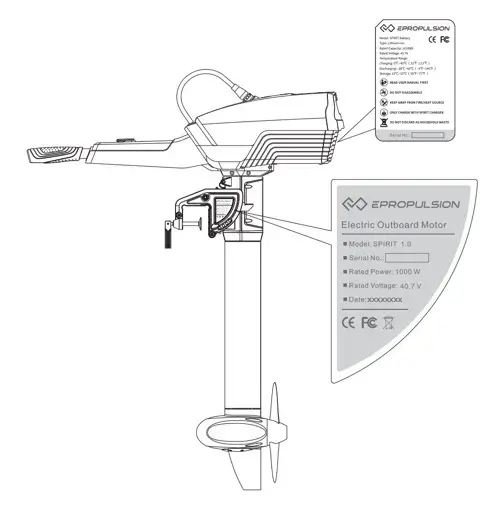
Find the Spirit 1.0 Plus serial number on the left side of the mounting bracket.
eLite
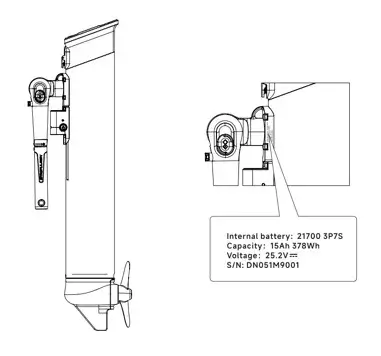
The eLite serial number is located on the right side of the motor, near the base of the tiller.
Spirit 2
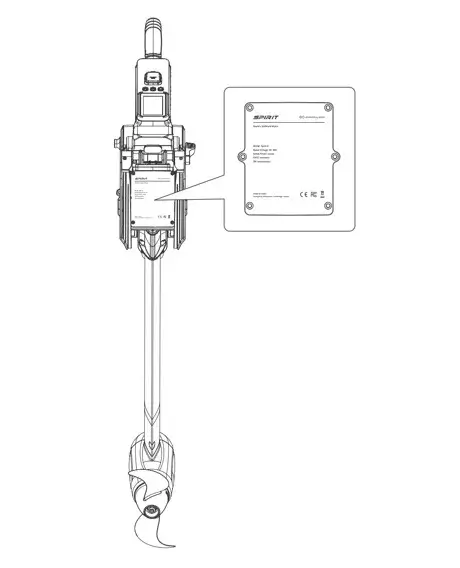
Find the serial number of your Spirit 2 in the battery bay.
RemigoOne/RemigoOne Neo
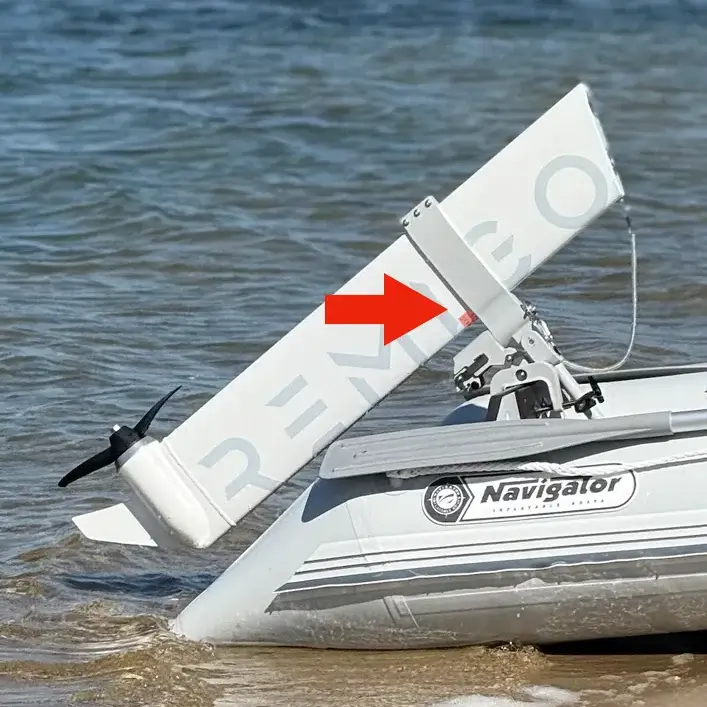
The serial number for your RemigoOne/RemigoOne Neo can be found on the edge of the motor opposite the propeller. It may be above or below the tiller bracket (or it may be covered up by the tiller bracket) depending on where it’s positioned on the body.
Can the RemigoOne be used as an emergency rudder in case of a rudder fail?
Yes, in case of a rudder failure, you can use RemigoOne as an emergency steering rudder.
Can I charge the RemigoOne while operating it?
Yes! The RemigoOne can run while being charged by any one of the charging mthods (standard, fast, DC-DC, solar).
The Spirit 1.0 Plus/Evo and RemigoOne are both 1kW motors (about 3HP). Can I go twice as fast as my 500W (1.5HP) eLite?
Perhaps somewhat surprisingly, no. Water drag increases exponentially with speed. To go faster, your motor has to push harder against resistance. In practical terms, doubling speed requires roughly four times the power. So a 1 kW motor will get you faster, but only about 30% faster—nowhere near twice as fast.
However, your ride with a Spirit 1.0 Plus / Evo or RemigoOne will feel faster than the eLite. You’ll notice stronger acceleration and a higher top speed (but don’t expect to double your speed). Think of it as moving from a bicycle to an e-bike—not a car. The upgrade is about power, range, and handling, not raw speed.
What you DO get when upgrading from an eLite to a larger 1kW outboard motor is:
- Higher top speed: Around 30% faster than the eLite.
- Much greater thrust: Helps against current, waves, and wind.
- Better efficiency at cruising speeds: A 1 kW motor running at half power (≈500 W) is usually quieter and more efficient than a smaller motor pushed to its maximum.
- Longer range with larger batteries: The Spirit 1.0 Plus/Evo comes with a 1276 Wh battery (about 3× the capacity of the eLite’s 378 Wh pack).
If there are no controls built into the tiller, how do you control the operation of the Remigo One?
Making the tiller “dumb”—it’s just an aluminum tube—is actually a smart design decision. It eliminates a potential mechanical and electrical failure point when a small cable needs to connect a rotating handle to the motor (at the base of the shaft).
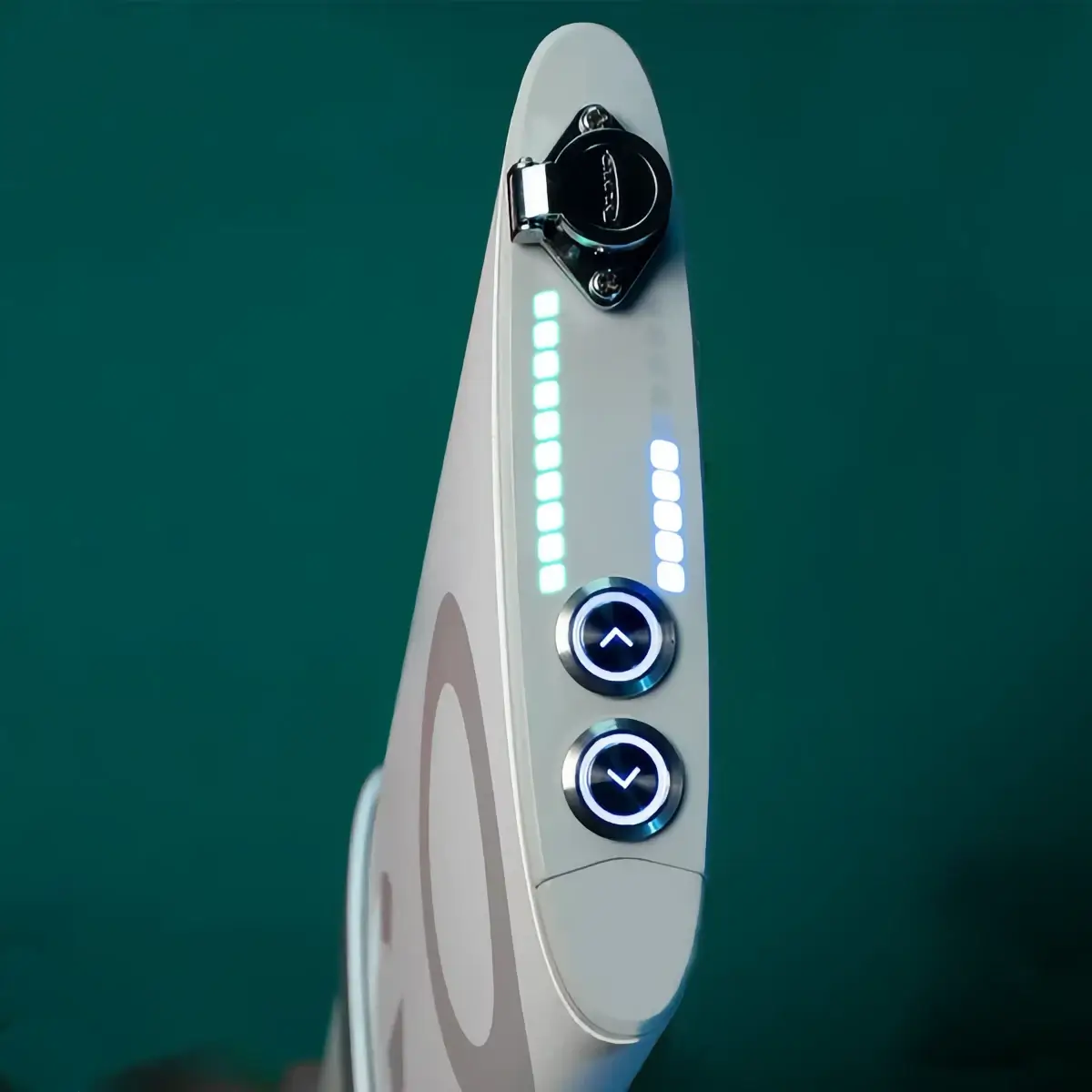
The RemigoOne has two simple buttons on the top of the unit, next to two LED displays (one for battery level, one for current speed level). From a standstill, press the button pointing forward to start slowly moving forward. Further presses increase the speed to the maximum (10 steps total). You can also hold down the button to rapidly increase the speed level. To slow down, push the button pointing backward, continue pressing until the motor is stopped.
To travel in reverse, from a standstill, press the button pointing backward to start slowly moving backward. Further presses increase the reverse speed to the maximum (10 steps total).
At any speed and travelling any direction, simultaneously pressing both buttons will stop the motor completely.
The same control scheme applies to the 2-button wireless remote.
Can the steering position be locked on the Remigo One so I can use my boat’s rudder to steer?
Yes, the tiller of the RemigoOne can be locked into a 90° position by raising the tiller to the vertical position. Coupled with the optional wireless remote, this is a great option for sailboats, allowing you to steer and operate the motor without needing to be near it.
What shaft lengths are available with the Remigo One?
One unique feature of the RemigoOne is its adjustable, stepless shaft length, which provides shaft lengths from S to XL, or 38cm (15″) to 59cm (23″) shaft lengths in one outboard. This means you don’t need to determine what shaft length you need before purchasing, and the same outboard can be used on your sailboat and your dinghy (in fact, with two transom mounts, you can easily switch between the two boats).
To adjust the shaft length, simply loosen three screws, then slide the tiller bracket clamp up or down to the desired posiiton, then tighten the screws back up.
How heavy is the Remigo One electric outboard?
The RemigoOne weighs only 9.5 kg (20.9 lbs), while the transom mount weighs 2.5kg (5.5lbs). This is significantly lighter than other 3hp electric outboards like the ePropulsion Spirit 1.0 Plus, making the RemigoOne the lightest 3hp-equivalent electric outboard currently available.
Note that the Spirit 1.0 Plus and Evo both weigh just over 10kg when the battery is detached (the battery is a further 8.7kg/19.2lbs). Because the RemigoOne battery is built into the motor itself it’s not possible to carry the motor and battery separately. This makes it especially impressive that the total weight of the RemigoOne is just slightly heavier than the ePropulsion Spirit motor without a battery, yet has similar power and range.
Does the Remigo One offer hydrogeneration so I can recharge the battery under wind power on my sailboat?
The RemigoOne does not include a hydrogeneration feature. If this is important to you, you may want to consider the ePropulsion Spirit 1.0 Evo.
Can I use a standard propellor for a gas motor on my electric outboard?
No, you should not attach a gas outboard propeller to your electric outboard for the following reasons:
1. Mounting Incompatibility
The Spirit 1.0 Plus uses a proprietary hub design specific to ePropulsion. Gas outboard propellers typically use a different hub size, spline count, and attachment method.
2. Performance Mismatch
Gas outboard propellers are designed for high-RPM combustion engines. Electric outboard motors have a larger propellor than gas-driven motors because of they have a much higher torque (at every speed), meaning you go faster at fewer RPMs with the larger propeller. Using the wrong propeller can drastically reduce efficiency and thrust.
3. Motor Strain and Damage
A mismatched prop can overload the electric motor, leading to overheating, reduced battery life or permanent motor damage.
4. Voided Warranty
Both ePropulsion and Remigo have warranties that will be voided from using unauthorized or third-party propellers.
Can the eLite can be charged via 12VDC while in operation?
Yes, it can be, however once you go over the wattage that the charger is producing it will shut off the charging feature. For example, the solar charge controller can produce up to 100W. If you stay at a speed where the output is less than 100W (i.e. 1/5 of total power output) it will slowly charge. Once you go over 100W, the charger will stop charging until you back off the throttle to less than 100W output.
What is hydrogeneration?
Hydrogeneration is used to create electricity and is used in hydroelectric power stations and an electric vehicle’s regenerative braking system. During hydrogeneration, water passively spins the propeller on the motor which generates electricity through electromagnetic induction.
ePropulsion is the first motor manufacturer to introduce hydrogenation into their motors.
On a sailboat with an ePropulsion electric motor, it requires the boat to be moving on it’s own from the wind, and travelling at a minimum of 4 knots. If you’re travelling greater than 19 knots, hydrogeneration is automatically disabled to prevent the motor from overcharging.
Hydrogeneration is available with the Spirit 1.0 Evo, Spirit 2, Navy 3.0 Evo, Navy 6.0 Evo or an Pod Drive 6.0 Evo motor (the folding propeller is not compatible). It requires a genuine ePropulsion battery.
To use hydrogeneration, place the Evo control in the neutral position, and turn on the hydrogeneration function in the control setting (which is on by default). The motor remains in a power-on state.
Hydrogeneration will automatically stop once the battery has reached a 90% charge.
Can I charge the Spirit 1.0 or Spirit 2 battery with a solar panel while operating it?
Yes, you can have a solar panel permanently connected and be charging while you’re using it or while you’re not.
Can I use my electric motor in saltwater?
Yes, all ePropulsion outboards are designed for use in saltwater. ePropulsion uses high-quality, aerospace-grade aluminum alloy, which is naturally highly-resistant to corrosion, as the base material.
Protective Coatings
On top of the aluminum alloy are two protective coatings. An anodic oxide coating (anodizing) is applied to aluminum alloy, and then it’s powder coated.

Pod drives require additional corrosion protection since they remain submerged in saltwater for years at a time. A hard anodic oxidation coating and Teflon coating to replace the normal anodic oxide coating and the powder coating.
Metal Connectors
To improve the connector durability, Spirit 1.0 Plus and Spirit 1.0 Evo feature a metal connector between the power cable and the battery. The base material is stainless steel, and PVD (Physical vapor deposition) processing is applied to the connector. PVD coating is harder and more corrosion resistant than coatings applied by a standard electroplating process. So after hundreds of times connecting and unplugging, the metal connector can still be corrosion-resistant.

Anodes
Sacrificial zinc anodes add further corrosion protection, and can be easily replaced as needed.

Tips for Keeping Your Electric Motor Corrosion-Resistant in Saltwater
Don’t keep your outboard immersed in saltwater permanently. Remove it from the water after each use and rinse it with fresh water. It’s so light and quick to remove (and even quicker if it’s an eLite!) and there is no fuel smell or fumes to worry about, so there’s really no excuse not to stow away indoors once it’s dry.
It’s also important to avoid scratches that could damage the protective coatings. If you happen to scratch the motor body, contact us (and include a photo of it) for inspection. Early damage control and repair will prevent it from getting worse.
What maintenance is required for an electric outboard motor?
Electric outboards eliminate the need for oil changes, fuel filter replacements, and spark plug maintenance, making them significantly easier to care for than combustion outboards.
ePropulsion electric outboards require minimal regular upkeep. Maintenance primarily involves rinsing with freshwater after it has been in saltwater.
When used regularly during the season, it’s advisable to lightly coat the electrical contacts with WD40 once a month. Ensure you cover the cable ends and Spirit battery ports with caps when disconnected.
Similar to gasoline outboards, ePropulsion models come with zinc anodes that should be replaced after significant wear. However, electric outboards don’t need winterizing, though proper battery storage is essential. Taking care of the battery of your electric outboard is crucial for its longevity.
Electric outboards don’t require winterization, but the battery should be charged to about 80% before winter storage. It is also advised to check the battery’s charge state every three months during long periods of inactivity.
Inspect the electrical connections of your motor for any corrosion or loose connections periodically. There are other similar maintenance duties you must should for an electric boat motor that you do for the traditional gas motors like checking the propellers and storing it properly.
Overall, electric outboard maintenance demands considerably less effort than that of gas boat motors.
Purchasing
What makes the RemigoOne so unique?
The main differences are:
- All-aluminum body instead of plastic housing.
- Integrated battery and cables, so the vitals are safely sealed inside. It’s possible (for OceansEV) to replace the after it loses capacity, but the pack is rated for 1000 cycles
- Robust connectors and pins
- The outboard is detachable from the bracket
- It’s very portable, easier to handle, and it is the lightest on the market among 1kWs (12 kg or 26.4lbs).
- You have all the shaft lengths in one model, so you don’t need to change the outboard when changing the vessel.
What’s the difference between “pre-order” and “special order”?
OceansEV generally keeps most popular products in stock (however, very popular products like the eLite and Spirit 1.0 Plus will often be out-of-stock in periods of high demand).
If a product is out of stock, you can pre-order it, which ensures the products will be reserved for you when they arrive in our next scheduled inventory shipment. Inventory arrives usually on a 4 week interval in the high-season months (May to October).
Certain less popular products or product variations like the longshaft version of eLite and longshaft Spirit 1.0 Plus are not generally kept in stock. For these and any other product that is not currently in stock, you have the option to special order. When you place a special order, we’ll order the product from our supplier right away, just for you, rather than add it to our next scheduled inventory shipment.
To summarize, if the product you want is not in stock currently:
- If you can wait for it for up to a month, pre-order it (meaning just add it to the cart and checkout normally). We’ll ship it to you as soon as it arrives (or contact you to pick up).
- If you can’t wait for it, add the special order surcharge along with the product to your cart. We’ll place the order with our supplier and have it shipped to us immediately.
You can also elect to get notified when an out-of-stock product you are interested in arrives at our warehouse. However, someone else may have pre-ordered it so it still may not be available for you, and you’ll need to wait for the next inventory shipment. If it’s something you definitely want, it’s better to pre-order or special order it.
How much does the Remigo One cost in Canada?
The current price of the Remigo One at OceansEV is $4,295.00
Is Oceans EV an official ePropulsion dealer in Canada?
Yes, OceansEV is the official ePropulsion dealer for Western Canada.
We are also the largest ePropulsion dealer in Canada, and the only Canadian dealer that focuses exclusively on electric outboard motors.
Do you offer financing or payment plans?
What is the warranty on ePropulsion outboard motors?
All ePropulsion electric outboard motors come with a standard 2-year warranty, with an additional year of warranty protection on all models except eLite if you register your motor with ePropulsion, for a total of 3 years.
How do I determine the proper shaft length for my ePropulsion outboard?
The shaft length you require depends on the transom height of your boat. For the Spirit 1.0 Plus, take a look at ePropulsion’s shaft length guide to determine which shaft length you need. The Spirit 1.0 Plus and Spirit 2 are available with an extra short, short and long shaft. The Spirit 1.0 Evo and Navy Evo series are available with a short or long shaft.
Note that shaft lengths of electric outboards are measured differently than combustion outboards, so it’s important to double-check which shaft length is ideal for your boat.
Can I return the electric motor for a refund?
Electric motors can be returned for a full refund if unopened and in the original packaging, anytime within 30 days of receipt. If opened, but undamaged (subject to our inspection) and with less than 10 minutes of use, you can return it for a full refund minus a 20% restocking fee within 30 days of receipt. See the Returns and Refund Policy page for full details.
Can I try it out before purchasing?
Yes! We have a couple options available:
- If you’re in or can get to Victoria, BC, we can arrange for a 30 minute demo of the Spirit 1.0 Evo or Spirit 2 during a sail on our 21′ sailboat where we have an electric outboard installed. Contact Us to book a demo.
- If you’re in or can get to Victoria, BC, we can arrange for a 30 minute demo of the Navy 6.0 Evo with our partner Gorge Rowing Club. Contact Us to book a demo.
- You can rent the motor for as long as you want with our try-before-you-buy programme. You’ll get 80% of the rental cost applied to the purchase if you decide to keep it. Learn more.
Why should I buy from Oceans EV?
Our number one goal is customer satisfaction. This is why we focus exclusively on electric outboard motors—so we can be the experts you need. We invest more time to know these products better than anyone. For most dealers, electric outboard motors are just a tiny portion of their catalog. Many dealers are “cash n’ carry” dealers, and will likely have you deal directly with ePropulsion for after-sales support. If you have a problem or a question about your purchase we will continue to provide support when you need us.
Rental Program
Is there a minimum timeframe that I can rent an electric motor for?
Local
If you are a local Victoria-area resident and can pickup and return the motor to us, you can rent for any number of full days (24-hour rental) or one or more weeks.
British Columbia
If you are a BC resident and require the unit to be shipped, you can rent for a minimum of 4 days. Transit time is not counted as rental days.
Canada
If you live outside BC, the minimum rental term is one week.
What if I damage the electric outboard or lose something? What if the electric motor gets stolen?
Just like renting a car, you assume responsibility for returning the electric motor in the same condition you received it, and must agree to pay for any loss or damage while in your possession. So if you break something, you’ll need to cover the cost of repair (or replacement if repair is not possible). If you lose it, you buy it!
Is the rental program available to anyone?
To rent an electric motor you must:
- be over 18
- reside in Canada
- have a physical mailing address (P.O. boxes are not acceptable)
When will my credit card be charged, and how much?
Your credit card will be authorized for the full value of the motor before the rental period begins, and re-authorized every seven days. At the end of the rental we’ll charge the actual number of days or weeks of the rental (unless you choose to keep it).
Keeping it past initial rental term
If you contact us and let us know you’d like to keep it for longer, we’ll charge the card for the extra duration you request (ex. 3 days, or 1 week).
If at any point the initial term has expired but it still has not been shipped back to us, we will begin charging the card for one day of rental for every day it remains unshipped.
If you continue to hang on to the motor, we’ll continue to charge according to how long it is being rented, up to 115% of the full purchase cost of the motor (at which point it is now consider sold to you).
Deciding to keep it
If you decide you’d like to keep the rental motor, it’s best to let us know as soon as possible to minimize further rental fees. As soon as you let us know your intention is to keep it, we will calculate your purchase cost (purchase price minus 80% of the rental fees you’ve paid so far), and charge your credit card. Once the transaction completes, you’ll receive a receipt and the motor is now yours. Your warranty begins now.
Returning the motor
Once the rental motor has been shipped back to us, we will stop any further rental billing. Once it is received back at our shop, our team will examine the motor for damage or loss of components.
- If the motor is still in perfect condition and nothing is missing, there will be no further charges.
- If there is damage that needs to be repaired or components that need to be replaced, we will charge your credit card the repair or replacement cost, as per the rental agreement.
Early returns
If it was returned earlier than you expected and the total rental term is less than what you’ve already paid, we will issue a credit to your credit card for the amount you paid minus the actual time it was rented.
What if I have problems with the unit I receive?
Just as if you had purchased a new motor from us, if you encounter any issues, please let us know right away and we’ll help you out. If it’s a problem that prevents you from using the electric motor, we’ll ensure any days that you can’t use it don’t count toward your rental time.
What if I want to purchase a different unit than the one I rented?
You may find that after using your rental outboard, you love the idea of an electric outboard, but the one you really need is a step above (or below) what you rented. No problem—the 80% rental fee credit can apply to any electric motor. Just ship the rental unit back to us, and once we’ve assessed the unit for damage, we’ll provide you a coupon code that you can use on your purchase of the new motor.
Shipping
What is Navidium Shipping Protection?
In an effort to provide greater assurance and peace-of-mind to our customers, we are happy to offer Navidium Shipping Protection. Filing a claim with shipping carriers is usually painful, unhelpful and very time consuming. For just 5% of your order value, Navidium Shipping Protection covers you in the event that your package is lost or damaged.
When you purchase Navidum Shipping Protection, your order is covered against loss or damage after filing a simple claim with us. If the claim is approved, we will immediately send you a replacement, no questions asked. We will then spend the time to work with the carrier to recoup any reimbursement (which doesn’t always happen!) Essentially, the risk is transferred to us.
What We Deem as Lost
- Your tracking shows “in transit”, has not been marked delivered, and has not updated for 10 days since the last update.
- Your package was delivered by the carrier to the wrong address, even though you provided the correct address at the time of order.
- Shipments that have been determined lost by the carrier.
What We Deem as Damaged
- Your order is delivered and the item is materially damaged.
- Some of your order is missing due to the box/package opening during transit.
Damage is required to be documented with photos and/or video, to our satisfaction before a claim will be approved.
What’s not covered by Navidium Shipping Protection
- Missing packages or packages returned to sender due to the incorrect or insufficient address information provided at checkout when the order is placed.
- Delays in transit. When our customer service team is aware of delays due to weather or carrier logistics problems, we reserve the right to classify these packages as ‘delayed’ rather than lost.
- Unshipped items due to backorders or pre-orders.
- Orders stuck in customs – we cannot be held responsible for customs delays. Please get in touch with the carrier and pay required customs fees. If you refuse customs payments, we are not liable for any return to sender fees and these will be deducted from your refund.
- Items that are returned to us for a refund or exchange that are not in a resaleable condition.
- Packages that have been stolen after delivery.
- Packages that have already been replaced or refunded under Navidium Shipping Protection.
How to Submit Your Claim
If you have selected the Navidium Shipping Protection, please contact us at support@oceansev.com within 5 days. A member of our customer service team will assist you within 1-2 business days.
What to include in your claim email
- Subject line: “Shipping Protection Claim for order “. Your order number can be found on your order confirmation email.
- Description of issue.
- Photo or video evidence of damage if applicable.
- Any other useful information that supports your claim.
- We will continue to track your package. Should it appear, we will ask that the package be shipped back to us at our expense.
What happens after your claim has been submitted
- We will begin an investigation on the lost or damaged package.
- After your claim has been submitted, please allow us 7 business days to work on your claim.
- If the shipping claim is denied, there is nothing further that can be done.
- Once your claim has been approved, we will send you a replacement.
Terms and Conditions
Navidium Shipping Protection is optional, but by opting-out, we will follow the claims policy with shipping carrier to either locate your parcel or deem it as lost. This may take 6-8 weeks and is at the discretion of the courier. The maximum claim amount with the carrier is typically $100.
- We reserve the right to deny claims due to insurance fraud, and/or abuse.
- Shipping protection is non-refundable.
If the carrier has a delivery confirmation at the correct address or photographic evidence that it has been delivered to your property, is with a neighbour or at a secure location, we are not responsible for a refund or replacement.
What if my motor or battery arrives damaged?
If you purchased Navidium Shipping Protection, Oceans EV covers damage 100%. If your order has arrived to you damaged, please take photos of the item and the packaging it arrived in to include in your claim when filing. To file a claim, please send an email to support@oceansev.com describing all the details and uploading all your photos.
If your motor has a manufacturing defect, please send an email to support@oceansev.com we’ll be happy to work with you to remedy the situation.
What if my order never arrives or is stolen?
As long as you purchased Navidium Shipping Protection at checkout, you’re covered. If your order has not arrived, please contact us and we’ll help you trace it.
If you didn’t purchase Navidium shipping protection, contact us immediately and we’ll try to help as best we can as we file a claim with the shipping company.
I purchased Navidium shipping protection, but there’s an issue with my delivery. When should I file a claim?
Marked As Delivered (Stolen)
- Claims will be reviewed no earlier than 5 calendar days and no later than 15 calendar days from when it was marked delivered
- Please note, some order issues may require a police report to be filed
Stuck In Transit (Lost)
- For Canadian orders, claims will be reviewed no earlier than 2 calendar days and no later than 30 calendar days from the last update. The maximum filing time is 60 days from the order date.
- For USA orders, claims will be reviewed no earlier than 20 calendar days and no later than 30 calendar days from the last update. The maximum filing time is 60 days from the order date.
Damaged
- Claims for damaged items require photos of the packaging and item(s) and must be filed no later than 15 calendar days from when it was marked delivered.
Can I track my order once it has shipped?
You’ll be provided a tracking number which will be emailed to you and available any time within your Oceans EV account.
How long will it take to receive my order?
Once your order is placed, it will be generally shipped within 48 hours (usually next day), depending on whether the components are in stock. Typical delivery times are within 2-8 days.